
Using WFP boxes, Hamas smuggles 8 tons of cigarettes
The armed group demands 100% ‘taxes’ per pack, one of which now costs nearly $300 in war-battered Gaza


Some eight tons of smuggled cigarettes surfaced in Gaza last week in boxes labeled as World Food Program aid, activists in the Strip revealed.
The operation, reportedly facilitated and “secured” by Hamas, included six tons of Shami-brand rolling tobacco from Iraq, more than 100,000 packs of Imperial cigarettes, and 400 liters of nicotine liquid.
“From the moment the news was published, we followed up on the matter on the ground through our specialized team,” wrote activist Hamza al-Masri. “It became clear that the trucks had entered through an international organization operating in Gaza.”
The goods – believed to have arrived via the West Bank – arrived at a warehouse in the Tuffah neighborhood of Gaza’s Old City, Masri said. Once the goods were unloaded, he explained, jeeps belonging to Hamas security agencies arrived, each with several businessmen carrying a barcode linked to a particular shipment.
Masri said that his sources confirmed the existence of a network of traffickers, both Palestinian and Israeli, gaining massive earnings from the transaction – particularly as a single pack of cigarettes can fetch over 800 shekels, or nearly $300, in the enclave.
Since the start of the war, Israel has largely prevented the entry of cigarettes into the territory, noting that Hamas collects a “tax” of nearly 100 percent to fill its war-depleted coffers.
Headquartered in Rome, the UN’s World Food Program is the world’s largest humanitarian organization, with offices in some 90 countries and a staff of over 22,000. In 2020 the WFP was awarded the Nobel Peace Prize.
In Gaza, the organization says it has delivered some 30,000 metric tons of food since the war that began with Hamas’s October 7, 2023 attacks on Israel. The WFP reaches over one million Gazans monthly, it says, with food prepared in dozens of kitchens across the territory.
Initial reports this weekend suggested that the contraband goods were delivered in WFP trucks, but the organization vehemently denied the allegations.
In a statement in Arabic, it called the accusations of its trucks’ involvement “completely unfounded,” and that it conducted its work “in accordance with the highest standards of transparency and accountability, with all shipments being carefully and thoroughly inspected in cooperation with the relevant authorities.”
Still, the statement made no mention of the WFP-marked boxes.
Ahmed Fouad Alkhatib, a Washington-based analyst born and raised in Gaza, wondered aloud on social media over how the boxes had apparently been repurposed.
“Are those simply empty WFP boxes being used to move contraband within Gaza, or does this mean that the cigarettes were actually hidden and covered up in WFP boxes outside of the coastal enclave before being sent in as aid?” he wrote.
“Is Hamas involved in this? Or could the smuggling be the work of organized criminals or merchants who can stand to make significant financial gains from selling overpriced cigarettes? What role did Israeli authorities play in this?”
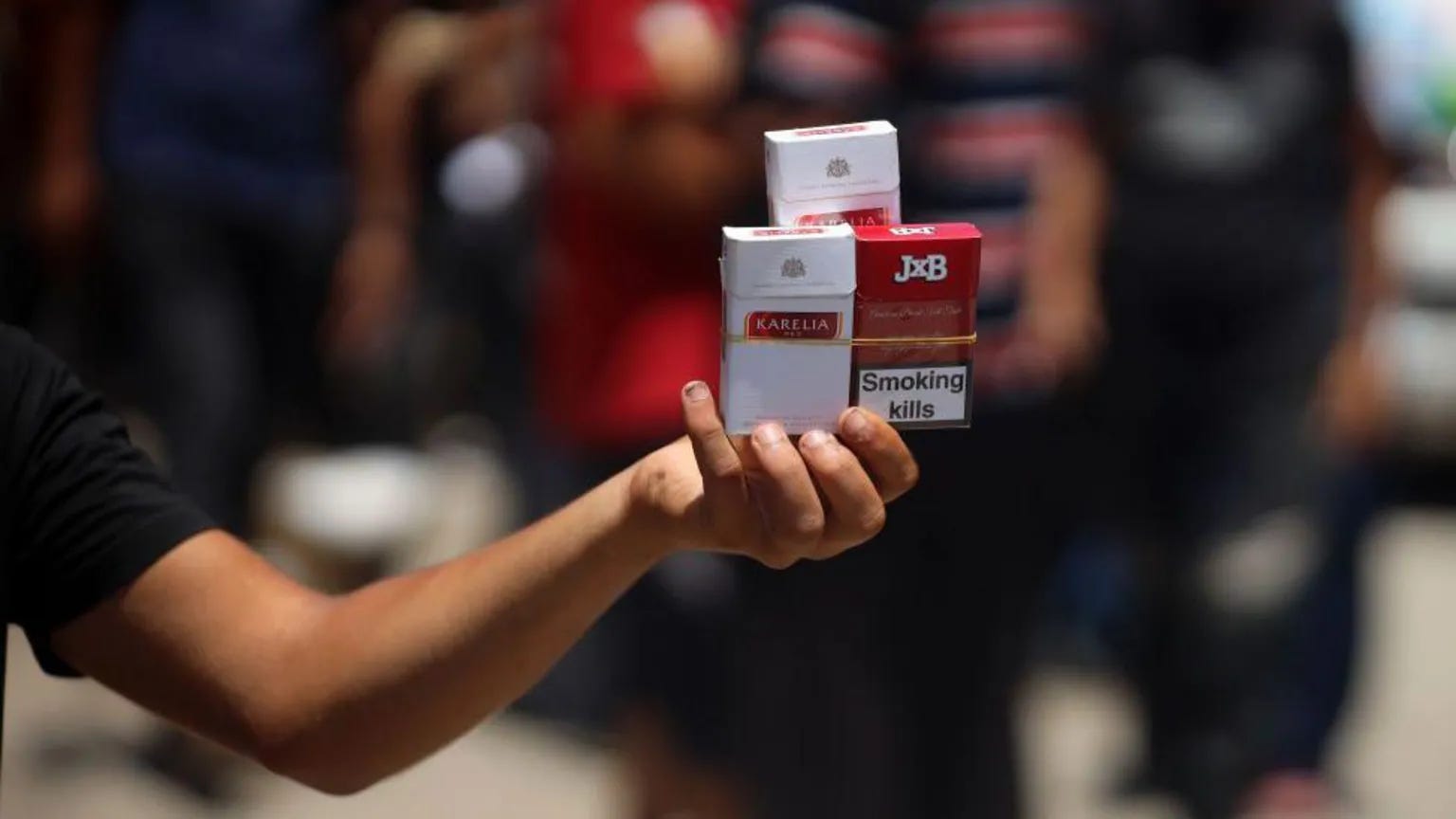
In February, the brother of the head of Israel’s Shin Bet security agency, himself an army reservist, was charged with smuggling 14 large cartons – some 7,000 cigarette packs – into the Strip for 365,000 shekels ($117,000). The same month, a dozen other Israelis were charged with facilitating the trafficking of cigarettes and other prohibited goods into the territory for millions of shekels.
In two operations last summer, smugglers transferred some 50 cartons of cigarettes, with each carton containing 50 packets. Each packet, in turn, contains 200 cigarettes – meaning the operation moved some quarter-million cigarettes for a total haul of $1.26 million.
Jusoor News has reported extensively over Hamas shaking down Gazan civilians for exorbitant “taxes” for everything from cigarettes to food to tent sites for displaced people.